



Solving Client Resistance to Essential Mortgage Insurance Protection?
For over two decades in the mortgage and insurance sectors, I've witnessed countless aspiring homeowners make critical decisions. Often, their journey is fraught with financial complexities, and one of the most common hurdles I've observed is the resistance to essential mortgage insurance protection.
Clients frequently view mortgage insurance, whether it's Private Mortgage Insurance (PMI) or FHA mortgage insurance premiums, as an unnecessary added expense rather than a vital safeguard. This perception leads to friction, missed opportunities for comprehensive protection, and ultimately, a greater risk for homeowners and lenders alike. It's a problem rooted in misunderstanding and lack of perceived value.
This article isn't just about 'selling more insurance.' It’s about understanding the core of client apprehension and equipping you with actionable, empathy-driven strategies to genuinely communicate the value of mortgage insurance. We’ll explore frameworks, real-world scenarios, and expert insights designed to transform skepticism into informed acceptance, thereby solving client resistance to essential mortgage insurance protection effectively.
1. Understanding the Root Causes of Resistance: It's Not Always About Cost
In my experience, resistance isn't always a simple 'no' to the cost; it's often a 'no' to something misunderstood or perceived as irrelevant. Clients are bombarded with financial jargon, and mortgage insurance can feel like just another obscure fee tacked onto an already complex transaction.
The primary reasons for client resistance typically fall into a few categories:
- Lack of Understanding: Many clients don't grasp what mortgage insurance is, who it protects (primarily the lender), or why it's required.
- Perceived as an 'Extra Fee': Without understanding its function, it's just another line item increasing their monthly payment.
- Misinformation/Prior Negative Experiences: They might have heard anecdotes from friends or family, or even encountered pushy sales tactics in the past.
- Emotional Overload: Buying a home is an emotional rollercoaster. Adding another layer of complexity can trigger anxiety and shut down rational decision-making.
- Trust Deficit: If they don't fully trust their advisor, any additional cost can feel like an attempt to upsell or exploit.
Before you can overcome resistance, you must first identify its specific source. Is it genuine financial strain, or simply a lack of clarity? This diagnostic step is crucial.

2. Shifting the Narrative: From Cost to Essential Protection and Opportunity
The biggest mistake I see professionals make is leading with the cost. Instead, we must reframe mortgage insurance as an enabler and a protector. It’s not just a fee; it’s often the key that unlocks homeownership for many and a safeguard against unforeseen circumstances.
Actionable Steps to Shift the Narrative:
- Lead with the 'Why': Explain *why* mortgage insurance exists. It allows individuals with smaller down payments (typically less than 20%) to qualify for a mortgage, turning the dream of homeownership into a reality sooner.
- Connect to Aspirations: "Mortgage insurance isn't just an expense; it's what makes this home, this neighborhood, this future possible for you right now."
- Highlight the Lender's Perspective (Briefly): Explain that it protects the lender, which in turn allows them to offer loans to a broader range of borrowers, including your client. This is a systemic benefit.
- Emphasize the 'Essential' Aspect: Position it as a non-negotiable component for certain loan types, similar to how car insurance is for driving a car. It's part of the financial ecosystem of homeownership.
"Clients don't buy products; they buy solutions to their problems or pathways to their dreams. Mortgage insurance, when framed correctly, is both."
Consider this common client objection and how to reframe it:
| Client Objection | Expert Reframe/Benefit |
|---|---|
| It's just another fee I don't want to pay. | It's the key that unlocks your home purchase today, allowing you to build equity and secure your future sooner. Without it, you might wait years. |
| What does it even do? Who does it protect? | It protects your lender, which is why they can offer you a loan with a lower down payment. This means less upfront cash from you, getting you into your home faster. |
| I heard it's a waste of money. | While it protects the lender, it enables you to access the market. The alternative might be waiting years to save 20%, during which time home prices could increase significantly, potentially costing you more in the long run. |
3. The Power of Personalization: Tailoring the Message to Individual Needs
Generic explanations fall flat. To truly resonate, your communication about mortgage insurance must be deeply personalized. Every client's financial situation, risk tolerance, and homeownership goals are unique.
How to Personalize Your Approach:
- Active Listening: Ask open-ended questions about their financial fears, their timeline for homeownership, and their long-term goals. "What are your biggest concerns about the overall cost of homeownership?"
- Scenario Planning: Illustrate how mortgage insurance fits into *their* specific financial picture. If they're a first-time homebuyer with limited savings, emphasize how PMI makes their dream achievable now. If they're stretching their budget, highlight the protection it offers the lender, making them a more attractive borrower.
- Use Analogies: Compare it to other forms of insurance they understand and value (e.g., car insurance protecting the lender's asset, or health insurance protecting against unforeseen medical costs).
Case Study: How Personalized Communication Helped the Chen Family
Case Study: How Personalized Communication Helped the Chen Family
The Chen family, first-time homebuyers, were highly resistant to PMI, viewing it as a pure waste. Their mortgage advisor, Sarah, didn't immediately launch into a standard explanation. Instead, she asked about their biggest fears regarding homeownership. They expressed anxiety about depleting their savings for a 20% down payment and the rising cost of homes in their desired neighborhood.
Sarah then personalized the PMI discussion: "Mr. and Mrs. Chen, I understand your concern about PMI. However, by leveraging it, we can get you into this home now with a 10% down payment. This means you keep more of your savings for emergencies or immediate home improvements, and you lock in today's home price. If you waited two more years to save 20%, given market trends, a similar home could cost an additional $50,000, far outweighing the PMI cost. PMI isn't just a fee; it's the bridge that gets you from where you are to where you want to be, safely and strategically." This personalized framing, linking PMI to their specific fears and aspirations, transformed their perspective, and they moved forward confidently.
4. Visualizing Risk and Reward: Data-Driven Communication
Humans are visual creatures. Abstract financial concepts become tangible when presented with clear, concise data and visuals. This is especially true when solving client resistance to essential mortgage insurance protection, as it helps demystify the product.
Strategies for Data-Driven Communication:
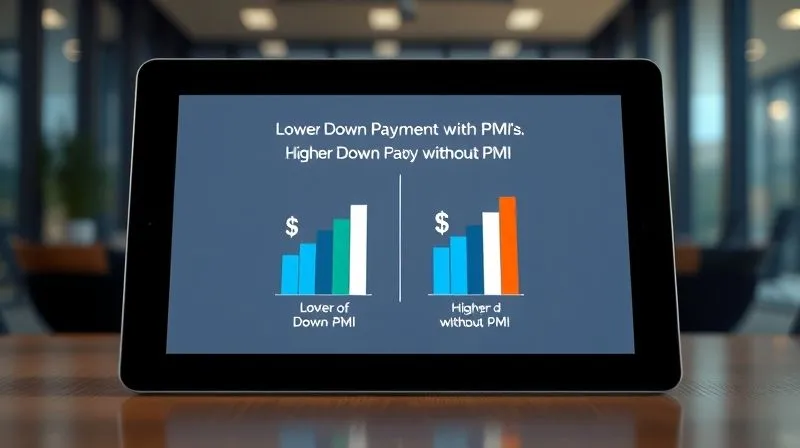
- Simple Infographics: Use charts or simple diagrams to show how PMI enables lower down payments. For example, a bar chart comparing the time it takes to save a 20% down payment versus a 5-10% down payment, alongside the cumulative PMI cost over that shorter period.
- Cost vs. Benefit Analysis: Present a clear breakdown. "Your PMI might be $X per month. This enables you to buy a home worth $Y. The alternative is waiting Z years, during which time the home value might appreciate by $A, making your total cost of waiting potentially higher than the PMI."
- Amortization Schedules: Show how PMI can be canceled once 20% equity is reached, illustrating that it's not a permanent fixture. Highlight the projected date of cancellation.
According to a study published in the Harvard Business Review, visual information is processed 60,000 times faster than text, making it a powerful tool for clarity and retention.
5. Building Unshakeable Trust and Authority
Trust is the bedrock of any successful client relationship, especially in finance. If clients perceive you as merely a salesperson pushing a product, resistance will be inherent. You must position yourself as a trusted advisor, an expert who genuinely has their best interests at heart.
Pillars of Trust and Authority:
- Transparency: Clearly explain *all* aspects of mortgage insurance – its purpose, cost, cancellation rules, and alternatives. Don't hide anything.
- Education, Not Sales: Focus on educating the client. When they feel empowered by knowledge, they are more likely to make informed decisions, even if those decisions involve something they initially resisted.
- Professionalism and Empathy: Be organized, punctual, and articulate. More importantly, listen empathetically to their concerns and validate their feelings before offering solutions.
- Certifications and Experience: Subtly communicate your credentials and years of experience. "Having guided hundreds of clients through this process..."
"Trust is built in drops and lost in buckets. Every interaction is an opportunity to add a drop."
As Forbes Advisor often highlights, understanding the nuances of PMI is crucial for both advisors and homeowners to make informed decisions. Your ability to convey this understanding builds immense trust.

6. Addressing Common Misconceptions Head-On
Misinformation is a significant driver of resistance. As an expert, it's your role to proactively address common myths with facts and clear explanations. Many clients come to the table with preconceived notions about PMI that need to be gently but firmly corrected.
Common PMI Myths and How to Debunk Them:
- Myth: PMI is forever.
Fact: For conventional loans, PMI can often be canceled once you reach 20% equity in your home (based on the original loan amount or current appraised value, depending on lender policy and loan seasoning). For FHA loans, cancellation rules vary, sometimes requiring refinancing. It's crucial to explain these specific rules. - Myth: PMI protects me.
Fact: While it enables *you* to get a loan, its primary purpose is to protect the lender in case you default. Explain that this protection for the lender is precisely *why* they can take on the risk of a lower down payment. - Myth: PMI is a scam.
Fact: PMI is a regulated financial product that serves a specific function in the mortgage market. Without it, many individuals wouldn't be able to achieve homeownership with less than a 20% down payment, effectively locking them out of the market.
A transparent discussion about these points can significantly reduce client anxiety. Provide them with resources, like links to official government housing agencies or reputable financial consumer protection sites, to further validate your information.
| PMI Myth | PMI Reality |
|---|---|
| PMI is a permanent cost on my mortgage. | For conventional loans, PMI can typically be canceled once you reach 20-22% equity in your home. It's not forever. |
| PMI is an insurance for me, the homeowner. | PMI primarily protects the lender in case of default, which is why they can offer you a loan with a lower down payment. This enables your homeownership. |
| PMI is a hidden fee or a scam. | PMI is a standard, regulated financial product that allows lenders to mitigate risk when borrowers put down less than 20%, making homeownership accessible to more people. |
7. Leveraging Technology for Enhanced Clarity and Engagement
In today's digital age, technology offers powerful tools to enhance client education and engagement, helping to overcome resistance. Static brochures are no longer enough; interactive tools can bring complex financial concepts to life.
Technological Approaches:
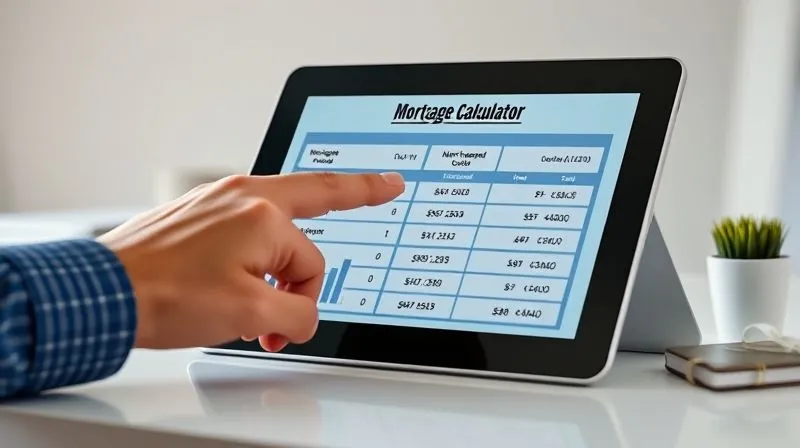
- Interactive Calculators: Provide clients with online calculators that demonstrate the impact of different down payment scenarios, including the cost of PMI versus the time saved or equity gained by buying sooner.
- Personalized Video Explanations: Record short, personalized videos explaining their specific loan terms and the role of mortgage insurance, making it feel less generic.
- Digital Whiteboarding: Use digital tools during virtual meetings to draw out concepts, illustrate timelines, and compare options in real-time.
- Secure Client Portals: Offer a portal where clients can access all their documents, FAQs, and educational resources at their convenience, allowing them to review information at their own pace.
This approach aligns with modern consumer expectations for digital-first interactions and empowers clients with accessible information, fostering a sense of control and understanding. According to the Consumer Financial Protection Bureau (CFPB), clear and accessible information is paramount for consumers making financial decisions.
Frequently Asked Questions (FAQ)
Is mortgage insurance always mandatory? No, not always. For conventional loans, it's typically required if your down payment is less than 20%. For FHA loans, mortgage insurance premiums (MIP) are mandatory regardless of the down payment size, though the duration can vary. VA loans, for eligible veterans, do not require mortgage insurance. Understanding these distinctions is key.
How is PMI different from homeowner's insurance? This is a crucial distinction. Homeowner's insurance protects you, the homeowner, and your property from perils like fire, theft, and natural disasters. PMI, or Private Mortgage Insurance, protects the lender in case you default on your mortgage. They serve entirely different purposes, though both are essential for comprehensive homeowner protection.
Can I cancel PMI later? If so, when and how? Yes, for conventional loans, PMI can typically be canceled. You can request cancellation once your loan-to-value (LTV) ratio reaches 80% (meaning you have 20% equity) based on the original appraisal. Lenders are legally required to automatically cancel PMI once your LTV reaches 78%. You might also be able to get it canceled sooner if your home's value has increased significantly, requiring a new appraisal. FHA MIP, however, often requires refinancing out of an FHA loan to remove.
What are the long-term financial implications of *not* having mortgage insurance if something goes wrong? If mortgage insurance wasn't available for your low down payment loan, you might not have qualified for homeownership in the first place. If you did qualify for a different loan type without it, and faced financial hardship leading to default, the lender would bear the full loss. The existence of mortgage insurance enables more accessible lending, but its absence could mean stricter lending criteria, higher interest rates to compensate for risk, or simply an inability to purchase a home without a substantial down payment. This underscores its role in the broader financial system, as detailed by institutions like the Federal Reserve.
Are there alternatives to traditional PMI? Yes, there are a few alternatives. One common option is a 'lender-paid mortgage insurance' (LPMI), where the lender pays the PMI premium, but typically charges a slightly higher interest rate on the loan. Another is a 'piggyback loan,' where you take out a second mortgage (e.g., an 80/10/10 or 80/15/5 loan) to cover the difference between your down payment and the 20% threshold, avoiding PMI but incurring a second loan payment. Each alternative has its own costs and benefits that should be carefully evaluated with an advisor. For some, like eligible veterans, VA loans offer the significant benefit of no mortgage insurance requirements, as outlined by the Department of Veterans Affairs.
Key Takeaways and Final Thoughts
Solving client resistance to essential mortgage insurance protection isn't about pushing a product; it's about mastering the art of empathetic education, clear communication, and building unwavering trust. As an industry veteran, I've seen firsthand that when clients truly understand the 'why' behind mortgage insurance, their resistance often melts away, replaced by informed acceptance.
- Diagnose the Root Cause: Understand why clients resist before attempting to explain.
- Reframe the Narrative: Position mortgage insurance as an enabler of homeownership and a vital protection, not just a cost.
- Personalize the Message: Tailor explanations to each client's unique financial situation and goals.
- Visualize with Data: Use clear visuals and comparisons to make complex concepts tangible.
- Build Trust and Authority: Be transparent, educate, and act as a trusted advisor.
- Debunk Myths Proactively: Address common misconceptions with factual, clear explanations.
- Leverage Technology: Utilize interactive tools to enhance understanding and engagement.
By integrating these strategies into your practice, you won't just overcome objections; you'll empower clients to make confident, well-informed decisions that safeguard their financial future. This approach not only benefits your clients but also solidifies your reputation as a truly valuable and trustworthy expert in the complex world of mortgage finance. Embrace this holistic perspective, and watch as client resistance transforms into genuine appreciation for the essential protection you offer.
Recommended Reading
- Global Employee Medical Crisis? Your 7-Point Plan for Emergency Care Abroad
- 5 Expert Steps: When Policy Wording Contradicts Claim Evidence
- Client Threatens E&O Lawsuit After Denied Claim? 7 Steps to Defend
- 7 Ways Travel Advisors Mitigate Client Risks from Policy Exclusions
- Annuity: Guarantee Retirement Income & Secure Your Future Now!





Your email address will not be published. Required fields are marked *